
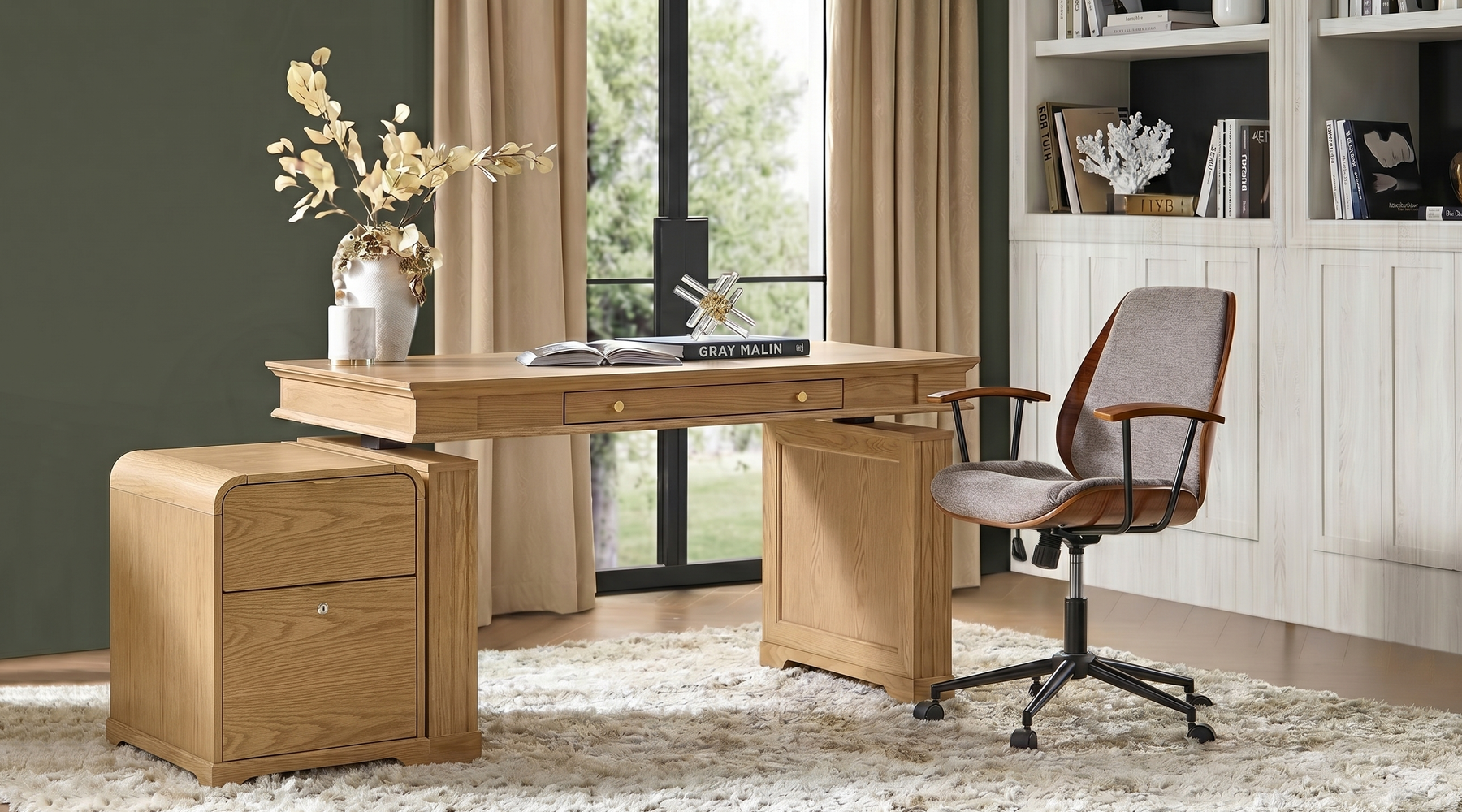
The standing desk UK market has matured. What was a niche home office upgrade five years ago is now a mainstream fixture in British hybrid working setups, and the choices are wider and better priced than ever. This guide covers the benefits, the sizing, the motor decisions, and what's worth knowing before you buy in 2026.
Why the Standing Desk UK Market Grew
Hybrid working has settled into permanence, and millions of UK workers now spend most days at a home desk. Extended sitting is a well-documented health risk, and alternating with standing reduces that risk substantially. The Chartered Institute of Personnel and Development [1] publishes research supporting the shift, and the UK HSE [2] explicitly recommends varied posture in its DSE guidance.
What a Standing Desk Actually Does
It provides a working surface with an adjustable height range, so you can work seated or standing and switch between the two through the day. That switch is either manual, via a crank handle, or electric, via a push button.
The Benefits (Real and Overstated)
The real benefits are reduced sitting time, better spine loading variation, and more energy and focus for many users. The overstated claims dramatic weight loss, cured back pain, longer life expectancy don't hold up. A standing desk is a useful tool, not a health cure. The NHS Live Well pages [3] cover the movement research in balanced terms.
Sizing for UK Homes
Standard widths run 120, 140, and 160 cm. For UK flat-sized rooms, 120 cm often works best without dominating the space, while 140 cm gives generous room for dual monitors and 160 cm suits larger home offices. A depth of 60 to 75 cm is standard and covers most laptop-and-monitor setups.
Height Range
The full range matters more than the maximum figure alone. Quality standing desk UK models adjust from around 65 cm to 125 cm, covering shorter and taller adults, while narrower ranges (72 to 115 cm) leave people at either extreme poorly served. When comparing models, check both the minimum and the maximum, not just the marketing headline.
Motor Type
Manual crank desks cost less but rarely get adjusted after the first week, since cranking a handle every time adds enough friction to break the habit. Electric push-button desks are what you actually want: single-motor suits typical home office loads, while dual-motor handles heavier setups and adjusts more smoothly. For most UK home users, single-motor electric in the £250 to £450 range delivers the best value.
Stability and Frame Quality
The frame is what separates a good desk from a cheap one. Quality frames use thick steel legs with cross-bracing and a stated stability rating, while cheap frames wobble at standing height, which becomes annoying within a week. The Furniture Industry Research Association [4] publishes the stability testing standards manufacturers build toward.
Weight Capacity
Single-motor desks typically handle 50 to 80 kg, while dual-motor desks handle 100 to 150 kg. Confirm your actual setup weight monitor, PC, papers, mug sits comfortably below the rated maximum, since routinely loading near capacity shortens the desk's working life.
Memory Presets and Extras
Memory presets, which recall your seated and standing heights at the touch of a button, are convenient but not essential adjusting manually without them takes about 10 seconds. They typically add £50 to £100 to the price, making them a nice-to-have rather than a must-have.
Cable Management
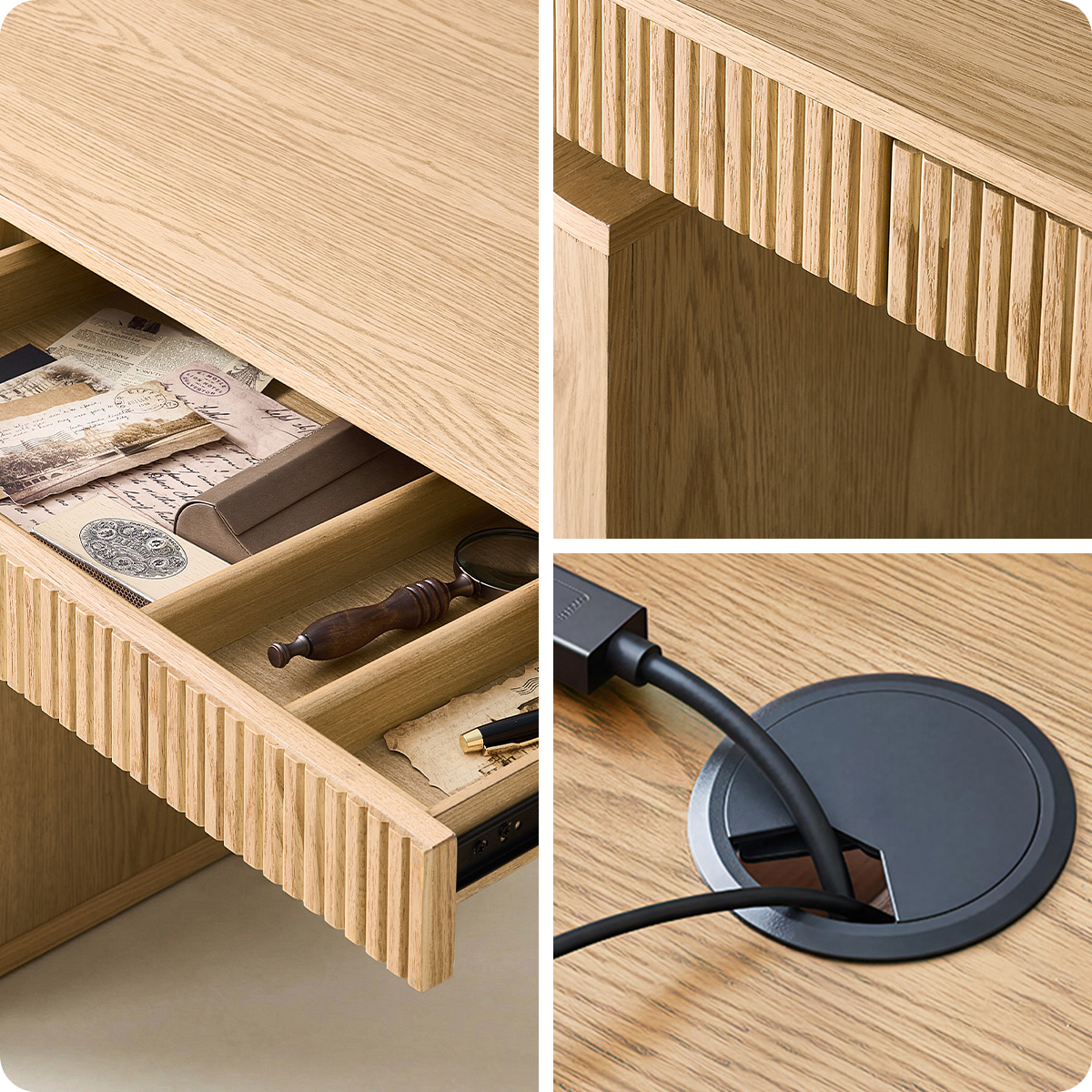
An adjustable desk needs cable management that flexes with the up-and-down motion. Under-desk cable trays designed for movement solve the problem; without them, cables snag every time the desk height changes.
The Standing Desk Converter Alternative
A converter that sits on top of your existing desk delivers much of the health benefit at a fraction of the cost, making it a smart first purchase for smaller UK flats or tighter budgets.
Setting It Up Correctly
When standing, elbows should sit at roughly 90 degrees with shoulders relaxed, and the screen top at or just below eye level. An anti-fatigue mat under the standing position reduces foot discomfort on hard flooring.
How Often to Stand
Alternate every 30 to 60 minutes, starting with 15 to 20 minute standing intervals and building up gradually standing for hours right away tends to cause foot and lower-back discomfort.
What to Skip
App-controlled smart desks with Bluetooth pairing rarely earn their extra cost, built-in wireless charging is more gimmick than function, and RGB lighting under the desk photographs well but wears thin in daily use.
Standing Desks and Seating Worth Considering
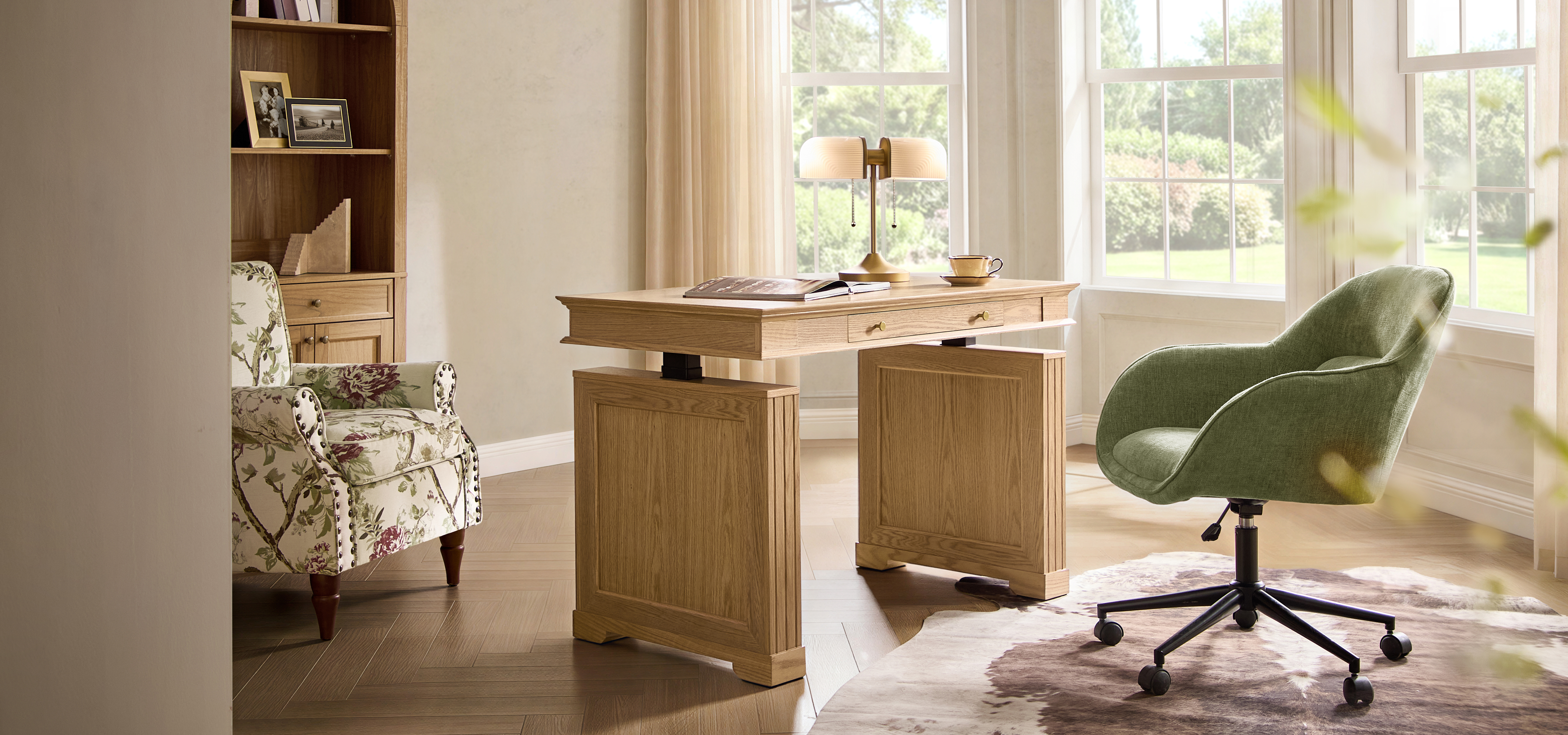
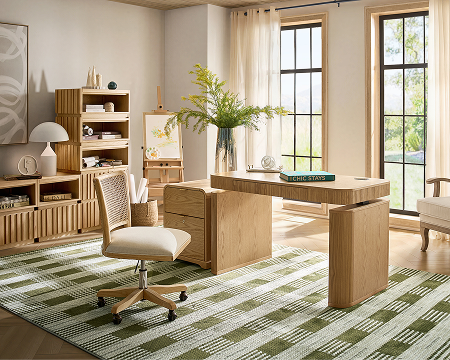
If you're ready to move from research to buying, a few Hulala Home pieces cover most standing desk UK setups. The Baggio Modern Electric Adjustable Standing Desk with Cable Management is a strong all-round pick, with a smooth single-motor lift, three memory presets, and 30% thicker legs for stability at full extension. The Julia Farmhouse Electric Adjustable Standing Desk offers the same electric lift and cable management in a warmer farmhouse finish for anyone who wants a softer look.
For seating, the Amparo Plus Mid-Century Modern Ergonomic Office Chair pairs naturally with either desk for long seated sessions, while the Blanca Cane Back Swivel Adjustable Height Office Chair is a budget-friendly option that still adjusts to match your desk height. If storage is the missing piece, the Modory Tessa Modular Storage System keeps files and cable clutter off the desk surface entirely.

Delivery and Assembly for UK Flats
Standing desks arrive in multiple flat-packed boxes, and the largest single component typically fits through standard UK doorways. Assembly takes 30 to 60 minutes for most models. The Hulala Home delivery page covers UK access details.
Where to Start
If you're ready to browse the range, the Hulala Home office collection is a sensible starting point, and the FAQs page covers common questions on measurement, assembly, and warranty.
FAQs
How much should I budget for a standing desk UK setup?
£250 to £450 for a solid single-motor electric desk, or £450 to £900 for dual-motor with a longer warranty.
Is a standing desk worth it for a home office?
For 6+ hours of daily desk work, yes the posture variation reduces musculoskeletal strain over months and years.
How long before I get used to standing?
Two to three weeks, building up gradually to avoid foot and lower-back discomfort.
Can I convert my existing desk?
Yes, with a desk converter, which delivers most of the benefit at a fraction of the cost.
Where can I see UK-specific options?
Browse the Hulala Home office collection and new arrivals for current models.
References
[1] (https://www.cipd.org/)
[2] (https://www.hse.gov.uk/msd/dse/)
[3] (https://www.nhs.uk/live-well/exercise/)
[4] (https://www.fira.co.uk/)
.png?w=1800&h=1000)



.png?w=614&h=180)

.png?w=1180&h=80)