
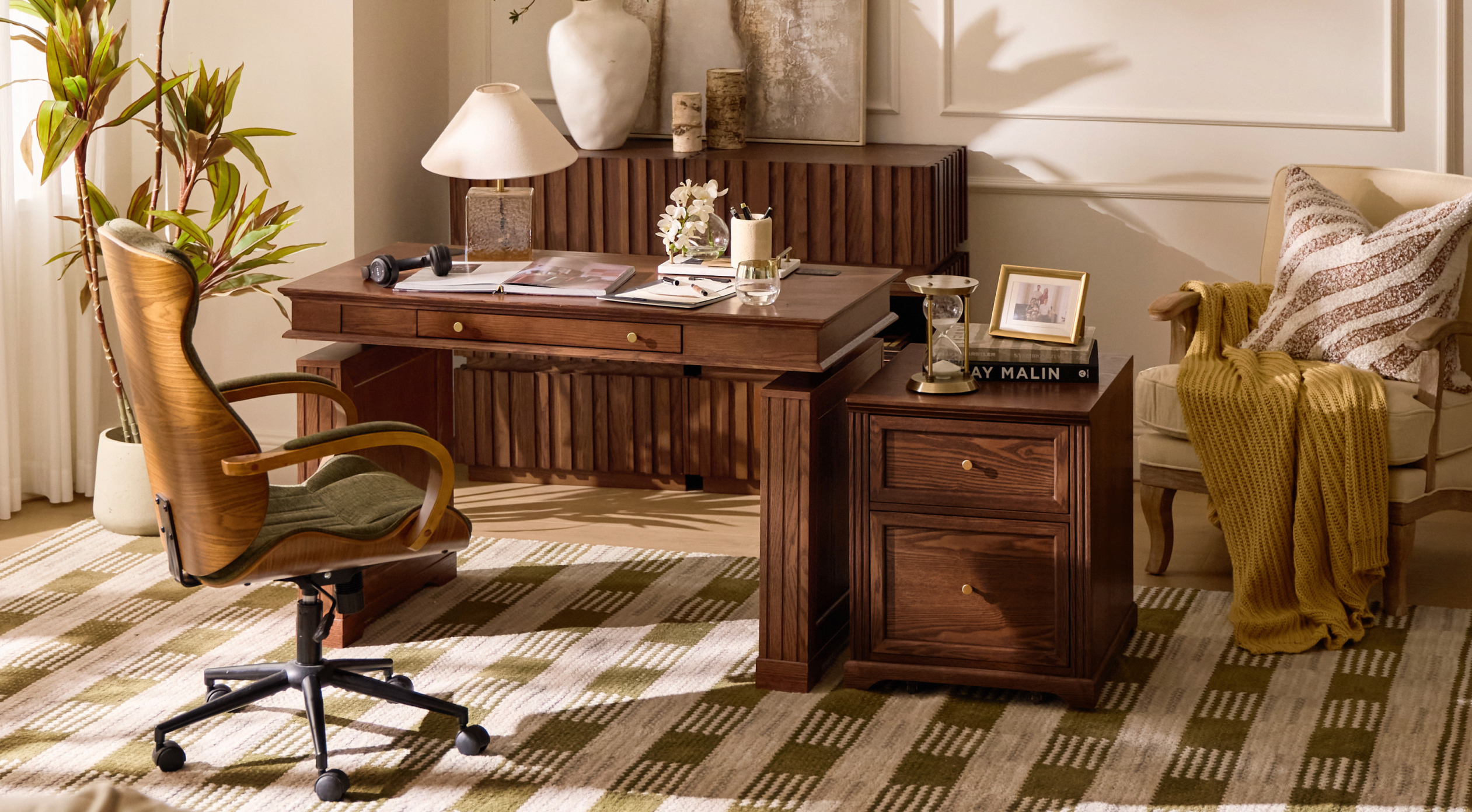
Working from home has a way of quietly filling every flat surface with paper. Bank statements, warranty booklets, tax records, the odd cable nobody can identify it all lands on the desk because there's nowhere better to put it. A proper filing cabinet UK households can rely on solves this in a way baskets and stacking trays never quite manage. It gives paperwork a fixed home, keeps it out of sight, and increasingly helps power the devices sitting on top of it.
This guide covers what matters when choosing a home office filing cabinet, from drawer layout to build quality, and looks at a few real options worth considering if you're shopping for one in the UK right now.
What to Look For in a Filing Cabinet UK Buyers Can Trust
Not every cabinet marketed for "home office storage" is built to hold actual files. Some are little more than bedside tables with a taller drawer. Before anything else, check that the lower drawer is sized for A4 paperwork, since that's the standard filing format across the UK and most of Europe. A drawer that only fits US letter-size folders will leave your ring binders and lever arch files awkwardly wedged in.
Weight capacity matters too, more than most buyers expect. A drawer stuffed with a year's worth of paper is heavier than it looks, so metal drawer glides tend to hold up better over time than plastic runners, which can sag or stick under a full load. It's also worth checking whether the cabinet includes a lock. Even in a private home, a lockable drawer is useful for anything containing personal or financial information, particularly if children, tenants, or visiting tradespeople have access to the room.
Drawer Configuration and File Capacity
Most home office filing cabinets fall into one of two layouts: a single deep file drawer paired with a shallow drawer on top, or two evenly sized drawers stacked together. The first configuration tends to suit people who need one dedicated space for hanging files and a separate spot for stationery, chargers, or odds and ends. The second works better if you're splitting storage between two ongoing projects or want symmetry with the rest of the room.
It helps to think about what actually needs filing before buying. A freelancer juggling several clients might want a deeper drawer with room for hanging folders, while someone mainly storing warranty documents, insurance papers, and the occasional bill needs less depth but appreciates a drawer that closes smoothly without catching.

Choosing an Office Cabinet with Drawers for Your Space
Size is where most people get it wrong. A cabinet that looks compact in a showroom photo can dominate a small home office once it's wedged beside a desk. Before buying an office cabinet with drawers, measure the exact footprint you have available, including the clearance needed to open the drawers fully, not just the width of the cabinet itself.
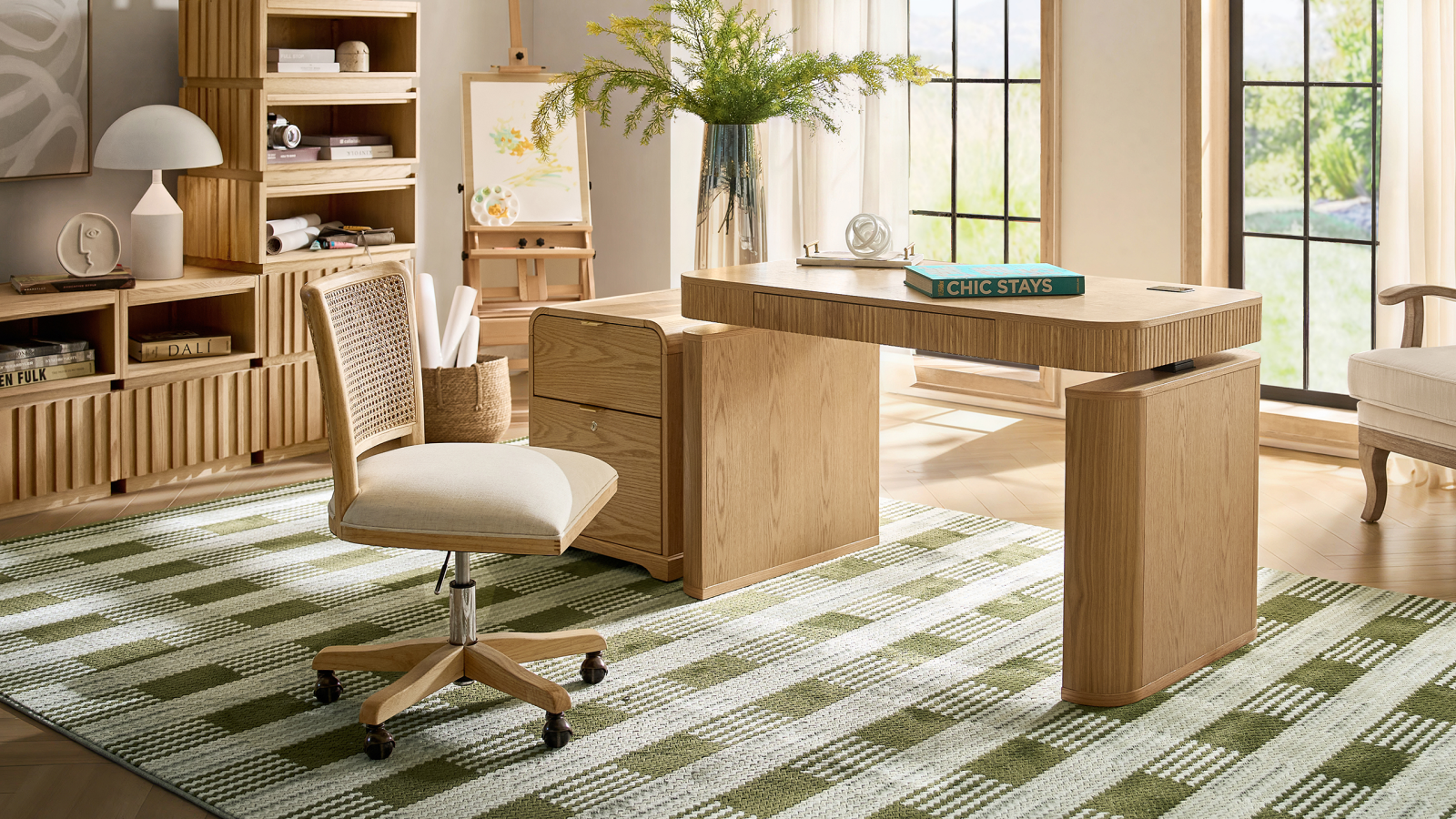
Style is the second consideration, and it's less trivial than it sounds, because a filing cabinet in a home office is rarely hidden the way it might be in a commercial building. It sits in view, often near a window or against a feature wall, so a fluted front, a warm wood finish, or a slim metal base can make the difference between a piece that feels like an add-on and one that looks intentional. Rounded edges are worth a second look as well, particularly in family homes, since they reduce the risk of bumps around a piece of furniture with sharp corners at hip height.
Why a Filing Cabinet with Charging Makes Sense Right Now
The average home office now runs on more devices than it did even a few years ago: laptops, phones, tablets, sometimes a second monitor or a printer. A filing cabinet with charging built into the rear panel solves a genuinely common problem: too many devices, not enough sockets near the desk, and a tangle of extension leads running across the floor.
The appeal isn't just tidiness. Research on office environments consistently links visual clutter to reduced focus, since a cluttered desk gives the brain more competing stimuli to filter out at once. A cabinet that quietly absorbs both paperwork and charging cables removes two sources of visual noise in one purchase, which is a small but genuine upgrade for anyone spending long hours at a home desk.
Materials, Safety and Everyday Durability
Most mid-range filing cabinets sold in the UK combine solid wood elements with manufactured wood panels, often MDF or particleboard, finished in a veneer or laminate. This isn't a downgrade; it's standard construction that keeps cabinets stable and affordable while resisting the warping that solid wood can suffer in rooms with fluctuating humidity, such as converted garages or garden offices.
Look closely at the base and legs too. A curved or widened base adds real stability and reduces the risk of tipping, especially in a cabinet that also holds a printer or a stack of books. Metal handles and hardware tend to outlast plastic fittings, and a metal lock on the file drawer matters more than its size suggests once you're storing anything sensitive.
Recommended Home Office Filing Cabinets
Selecting the right cabinet comes down to your personal storage needs, available footprint, and aesthetic. Here is a comparison of three standout designs worth considering.
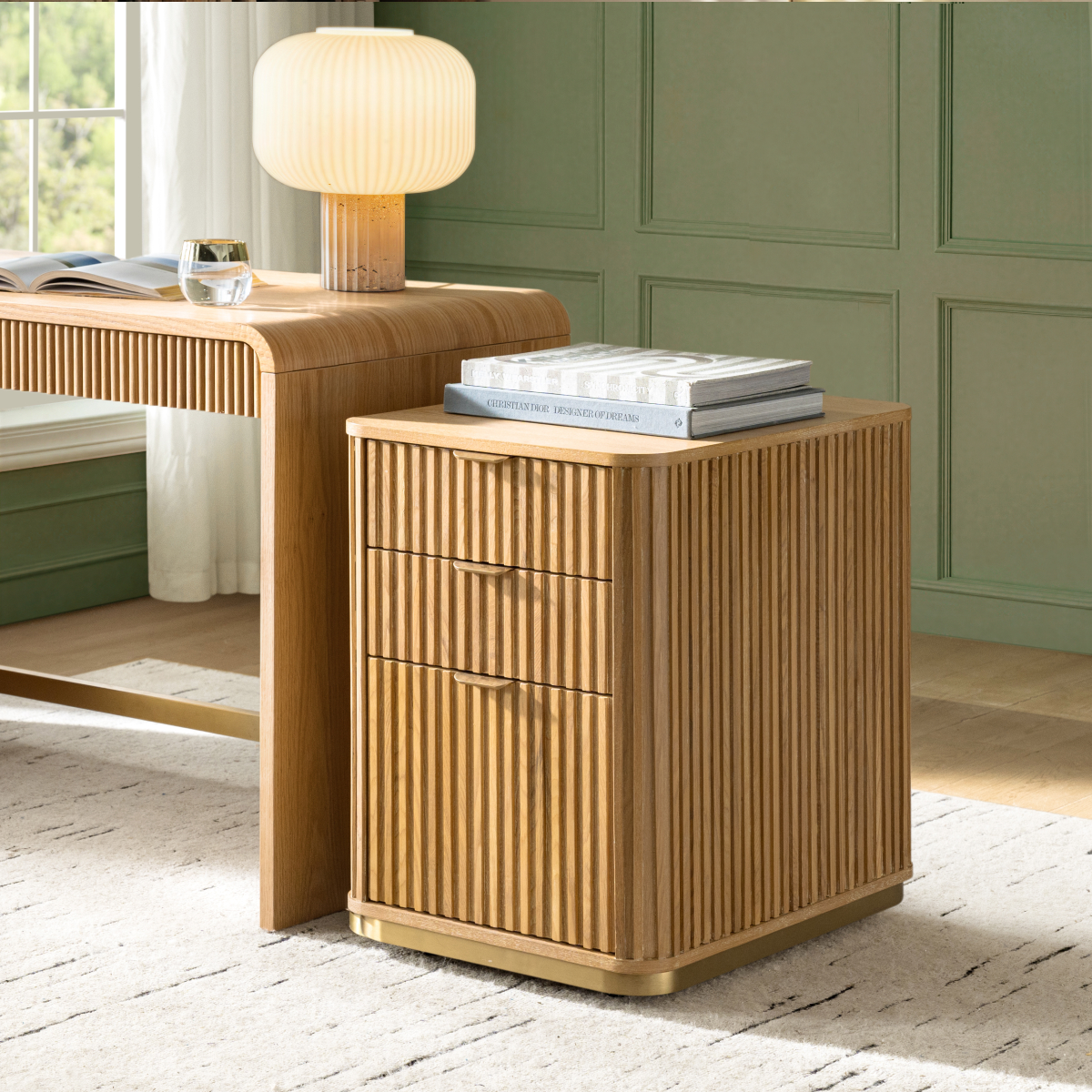
Mason Modern Fluted 3-Drawer Filing Cabinet
The Mason cabinet pairs two compact upper drawers, ideal for stationery and small accessories, with a spacious bottom drawer built to hold A4 files. Vertical fluted detailing across the front adds texture, while the slim metal base and rounded side edges give it a refined, American-modern feel that suits both a home office and a living space. It arrives fully assembled, which is worth knowing if you'd rather skip the flat-pack process altogether.
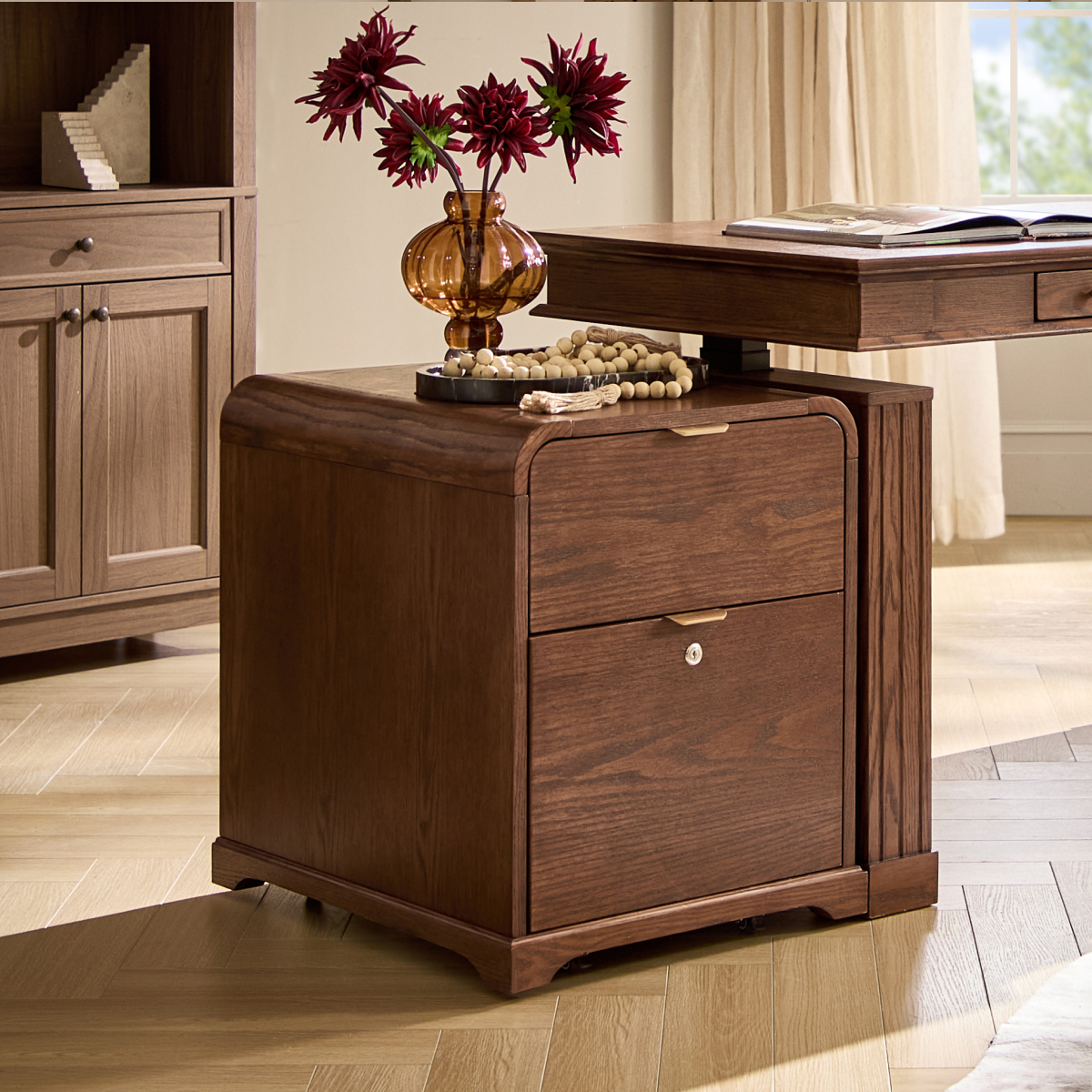
Julia Farmhouse Wood Filing Cabinets
For a warmer, more traditional look, the Julia cabinet leans into a heritage-inspired design with a solid wood finish and a clean, farmhouse-style profile. A compact top drawer handles everyday stationery, while the generous lower drawer is sized for A4 and legal-format files. It also includes built-in USB and USB-C charging ports so that a device can stay topped up without a separate adapter cluttering the desk. The lower drawer includes a metal lock, useful for anyone storing documents they'd rather keep private.
Baggio Modern 2-Drawer Filing Cabinet with Charging
The Baggio cabinet is built around the charging problem directly, with USB, Type-C, and dual three-prong power outlets on the rear panel, letting phones, tablets, and laptops charge straight from the storage unit itself. Rounded edges on the top and sides reduce sharp corners, which makes it a sensible pick for busy households, while the bottom drawer sized for standard A4 files includes a metal lock for extra security. A curved, stable base and metal handles round out its sleek, American-modern styling.
Conclusion
A good filing cabinet earns its place in a home office by doing more than one job well. It should hold real A4 paperwork without straining the drawer glides, fit the room without overwhelming it, and ideally take some of the charging load off an already crowded desk. Whether the priority is a fluted, gallery-ready finish like the Mason, the warmth of solid wood in the Julia, or the built-in charging of the Baggio, matching the cabinet to how the space is actually used will matter far more in the long run than how it photographs on day one.
Frequently Asked Questions
What size filing cabinet do I need for a home office?
Most home offices are well served by a compact two-to-three drawer cabinet, roughly 45 to 55 cm wide and 60 cm deep, which fits neatly beside a desk without dominating the room. Measure the space including drawer clearance before buying, since a cabinet can look smaller in a photo than it is in person.
Do filing cabinets with charging ports need to be plugged into a wall socket?
Yes. Cabinets with built-in USB or Type-C charging still draw power from a standard wall outlet through an internal cable, usually routed out through the rear panel, so they need to sit within reach of a socket.
Is a wooden or metal filing cabinet better for a home office?
Wood-finish cabinets, built from solid and manufactured wood, tend to suit home environments better aesthetically and are the more common choice for UK home offices, while metal cabinets are typically favoured in commercial settings where heavier daily use is expected.
How do I know if a filing cabinet will fit A4 documents?
Check the interior drawer dimensions listed in the product specifications rather than the overall cabinet size. A drawer needs to be at least 32 to 34 cm deep internally to comfortably hold A4 hanging files without documents catching on the sides.
Should a home office filing cabinet be lockable?
It's worth prioritising if the cabinet will store financial records, contracts, or any personal data, particularly in shared or family homes. A simple metal lock on the file drawer is a standard feature on most mid-range and higher cabinets.
-(1).jpeg?w=2569&h=1427)



.png?w=614&h=180)
.png?w=1180&h=80)