
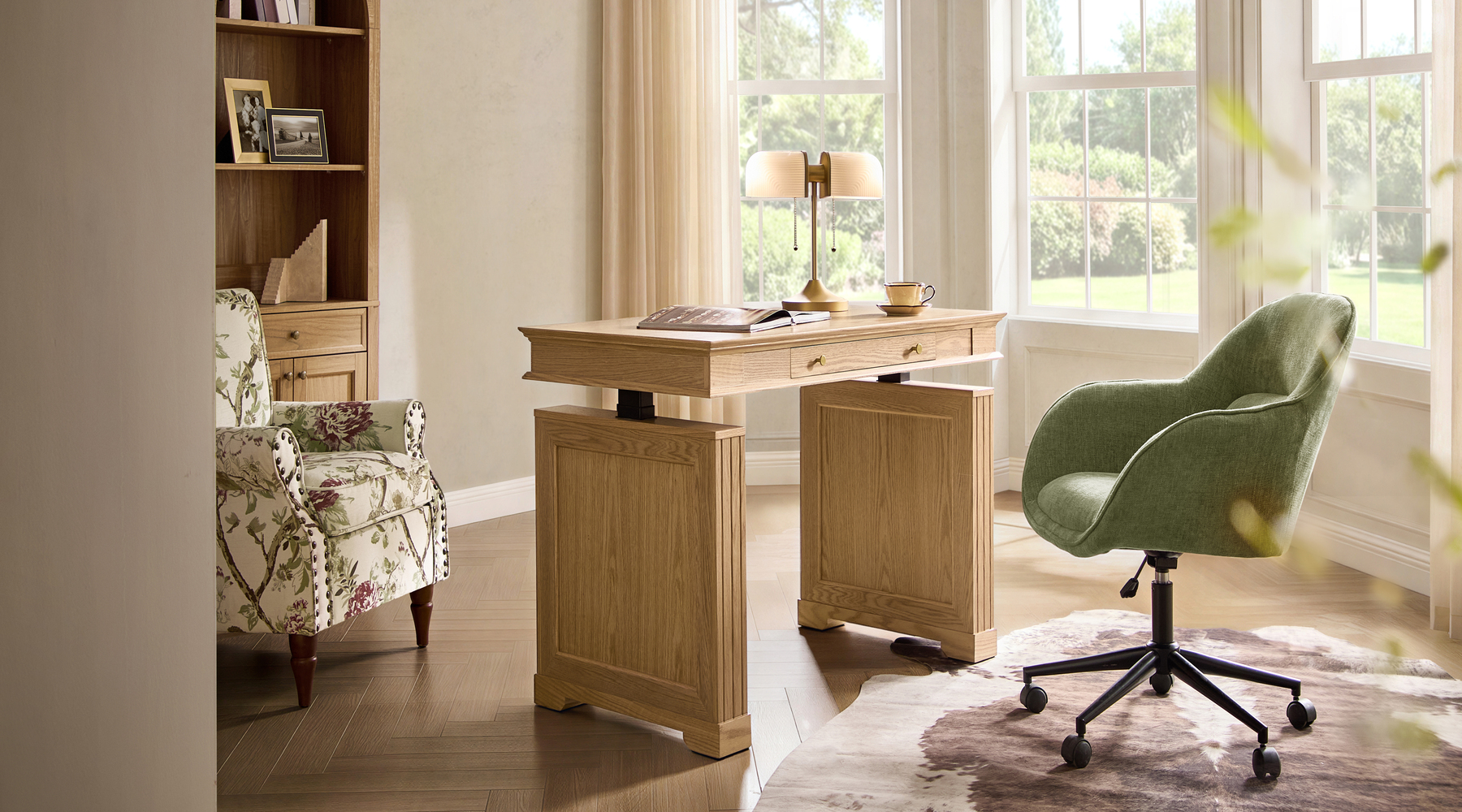
Setting up an Ergonomic Home Office in a small UK flat is a constraint problem more than a furniture problem. You are working with floor space measured in square metres rather than square feet, ceilings that often dip under doorframes, and rental rules that say no drilling into walls. The good news is that a well-designed compact workspace can match or beat the comfort of a much larger setup, provided you make a few deliberate choices early. This guide walks through how to do it, what to buy, and what to skip.
Why an Ergonomic Home Office Matters Even in Small Spaces
Working hunched over a kitchen table for forty hours a week takes a measurable toll on your back, neck, and wrists. The UK Health and Safety Executive publishes Display Screen Equipment guidance precisely because poor workstation setup is one of the most common preventable causes of work-related musculoskeletal disorders. The same principles apply at home, even if your employer does not formally cover the workspace under DSE regulations. [1]
Step One: Audit Your Available Space
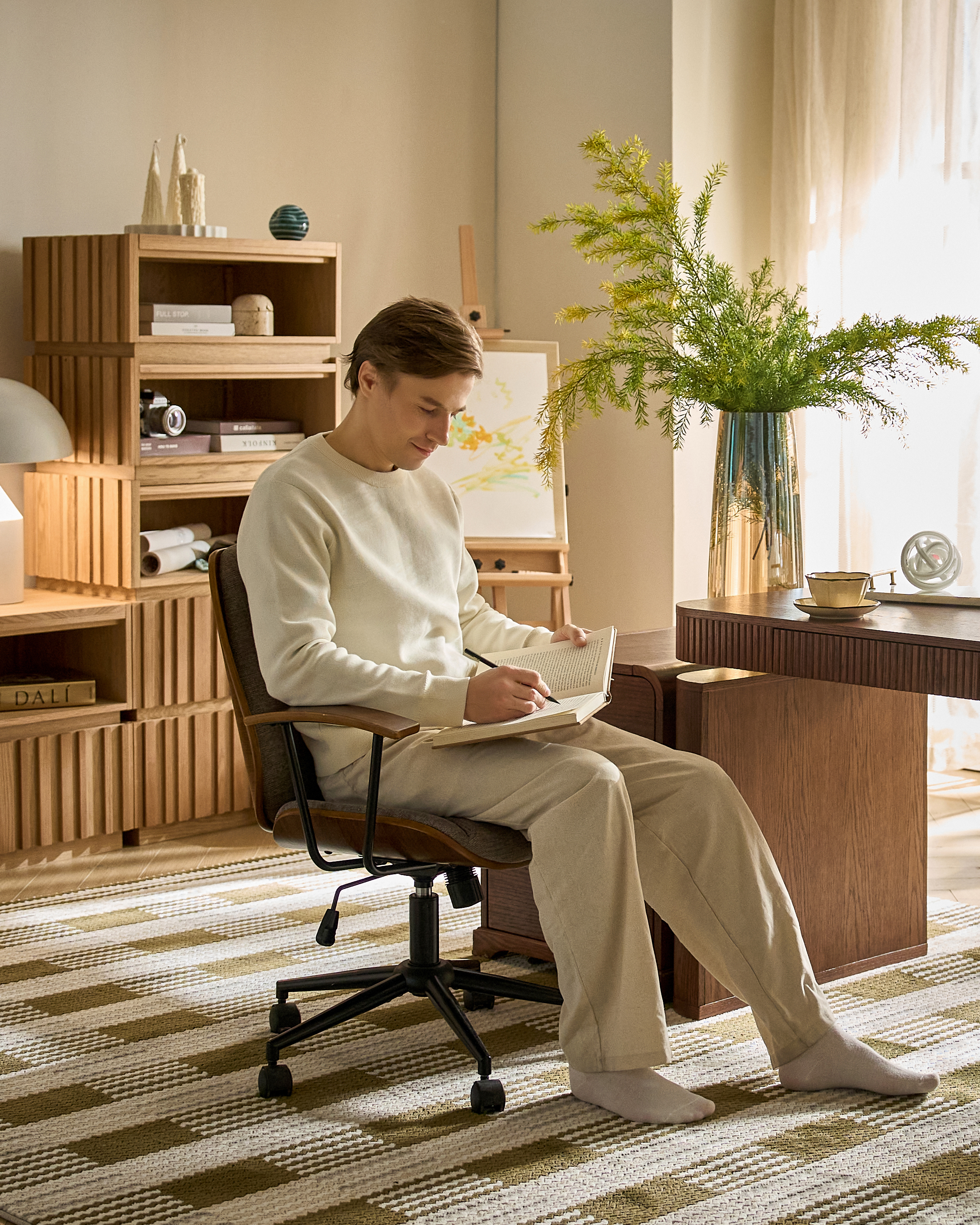
Before buying anything, measure. Note the wall length where the desk might sit, the depth available in front of it (you need at least 70 cm for a chair to reverse out), and the height of any obstacles like radiators, window sills, and skirting boards. The honest answer to whether you can fit a dedicated workspace might be yes in a corner of the living room, no in the bedroom, or only if you convert a wardrobe.
Common Small-Flat Options
● A compact desk against a wall in the living room, set up so you can put work out of sight at the end of the day.
● A wall-mounted fold-down desk that disappears when not in use.
● An alcove or under-stair nook converted with a narrow desk and a slim chair.
● A wardrobe-converted cloffice, where the doors close to hide the workspace.
Step Two: Choose the Right Desk
The desk is the foundation. For most adults, a desk surface at 72 to 76 cm height works for typing with a properly adjusted chair. Smaller surface area beats taller surface area if forced to choose; you can stack a monitor riser, but you cannot shrink a desk that is too tall. The Hulala Home office collection lists compact desks designed for UK flat sizes, with depths from 40 to 60 cm that fit narrow rooms.
Step Three: Pick the Chair Carefully
A good chair is the most consequential single decision for your Ergonomic Home Office. Cheap chairs feel fine for a week and then become daily back pain. Look for adjustable seat height, lumbar support, a tilt mechanism, and a five-point base. Armrests should be adjustable in height. Mesh backs breathe better in summer; padded backs feel warmer in winter. The Hulala Home Office Chairs range includes options that work as light-duty desk chairs in living-room setups where a full task chair would dominate the space.
Step Four: Get the Monitor Height Right
Eye-level monitor placement is the single biggest fix most home workers ignore. The top of the screen should sit at or just below your eye level when seated straight, at roughly an arm's length from your face. A stack of books works as a monitor riser for free; a dedicated riser with storage underneath is better. Laptop users should add an external keyboard and mouse so the laptop can be elevated to the correct height without compromising wrist position. The NHS guidance on home working reinforces this point. [2]
Step Five: Lighting That Does Not Wreck Your Eyes
UK flats often have inadequate natural light, especially in basement and ground-floor units. Position your desk perpendicular to the window when possible, never facing it directly (causes screen glare) and never with your back to it (causes silhouette glare on the screen). Add a desk lamp with a warm-white bulb for evening work. Avoid overhead fluorescent or harsh LED ceiling fixtures as your primary work light.
Step Six: Cable Management and Storage
Visual clutter is mental clutter. Use a small cable tray under the desk, route power leads behind furniture, and keep only the items you use daily on the surface. Vertical storage (shelves, pegboards) is your friend in small spaces because it uses wall area you are not paying floor rent for. The Hulala Home delivery and assembly notes explain what comes ready-built versus flat-pack for UK addresses.

Working from a Sofa or Bed: Don't
If there is one habit to break, it is working from the sofa or bed. The Chartered Institute of Personnel and Development has published research showing that sustained sofa working correlates with significantly higher reports of back pain than even mediocre desk setups. Even a small dedicated workspace, used consistently, beats a comfortable surface that wrecks your posture. [3]
Standing Options for Tiny Spaces
A full standing desk is rarely practical in a small UK flat. A standing desk converter that sits on top of your existing desk can give you the same benefit without doubling your footprint. Alternate between sitting and standing every 30 to 60 minutes. NHS Live Well covers sitting time and movement breaks in more detail. [4]
Furniture Picks That Work in a Small UK Home Office
Not every small UK flat uses space the same way. Some home offices need furniture that blends into a living room corner, while others benefit from pieces that support long working hours without overwhelming the room. Choosing products that match both your workflow and your available space can make an Ergonomic Home Office easier to maintain long term.
For Better Support During Long Workdays
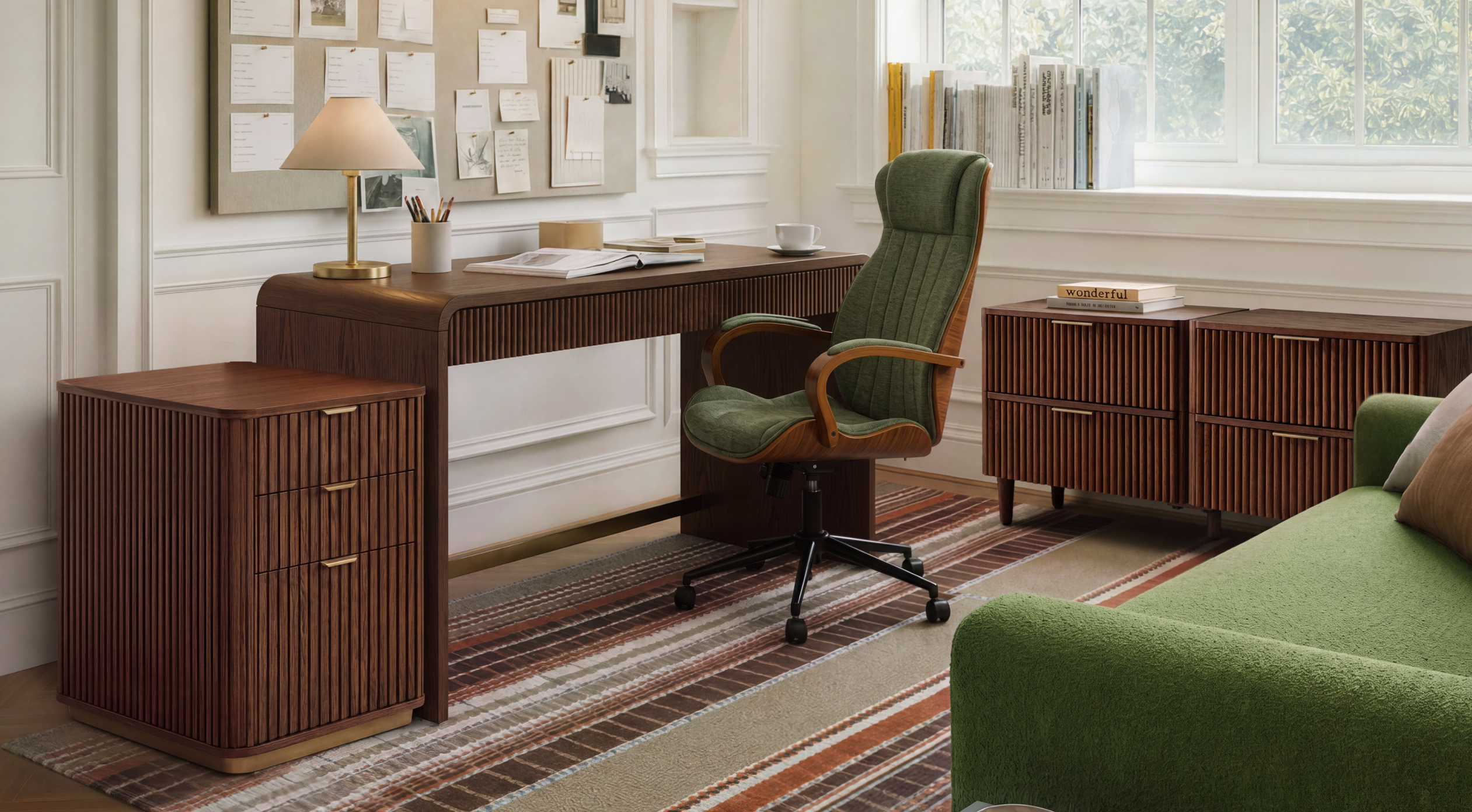
The Amparo Plus Mid-Century Modern Ergonomic Office Chair with Padded Arms is designed for people who need full ergonomic support but want something more refined than a bulky corporate chair.
● High-back design with integrated lumbar shaping to support healthier posture
● Padded armrests and high-density foam cushioning for all-day comfort
● Gas-lift height adjustment and 360-degree swivel movement
● Recline and lock functionality for flexibility between focused work and short breaks
● Curved bentwood frame adds warmth and works naturally in living-room office setups
Large executive chairs often dominate small UK flats. The Amparo Plus creates a calmer visual presence while still delivering the ergonomic features needed for everyday work.

For Small Flats That Need Flexible Working Space
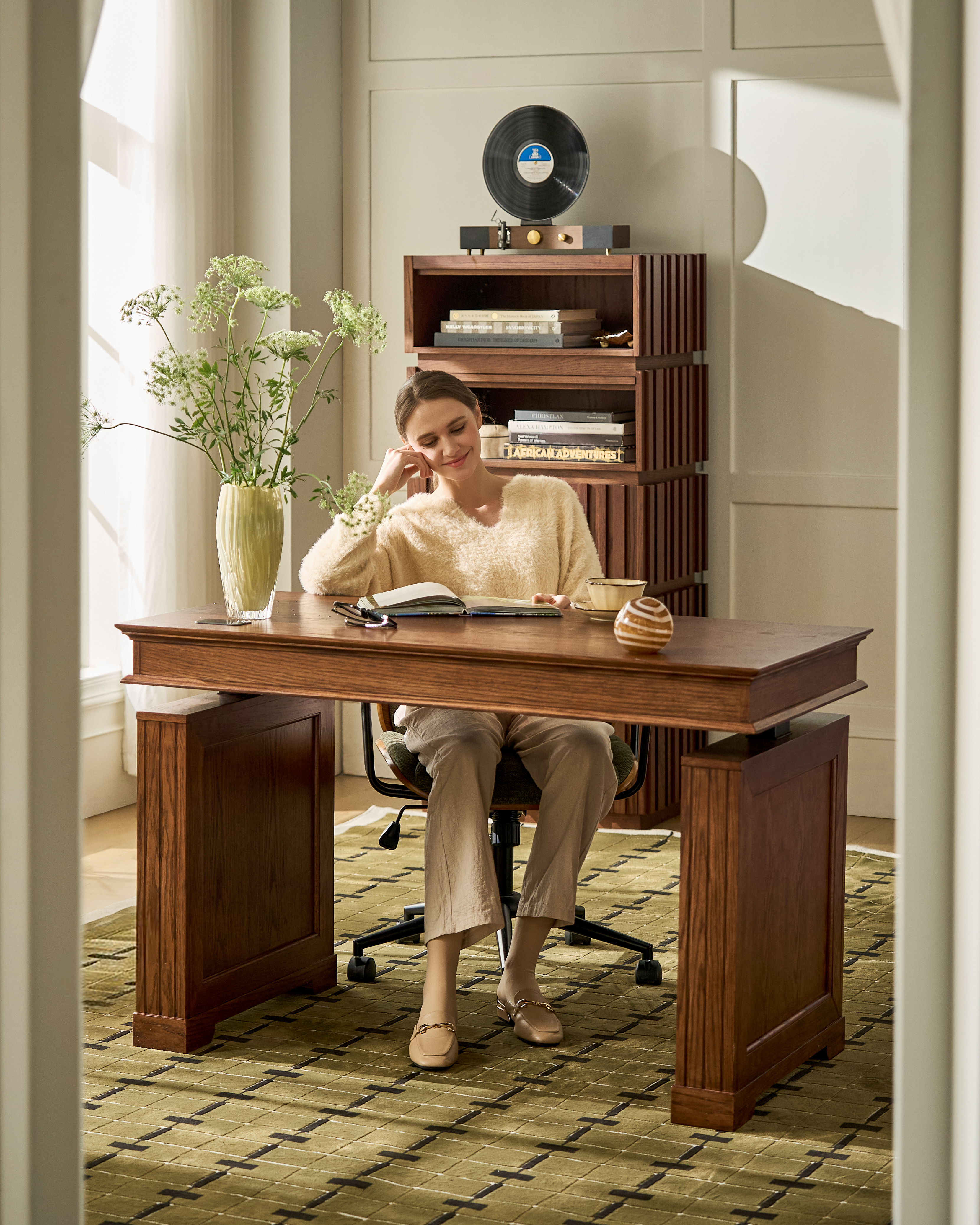
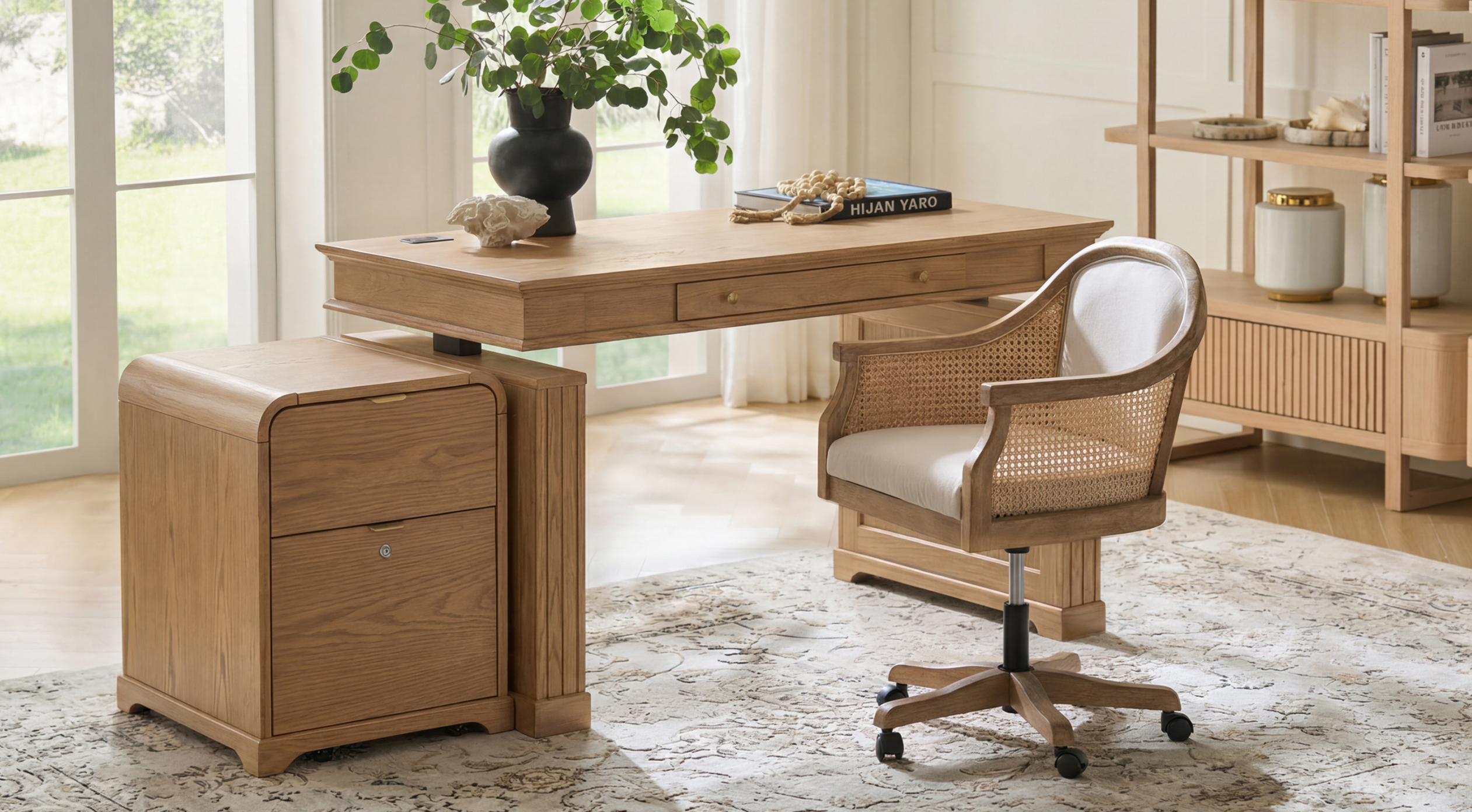
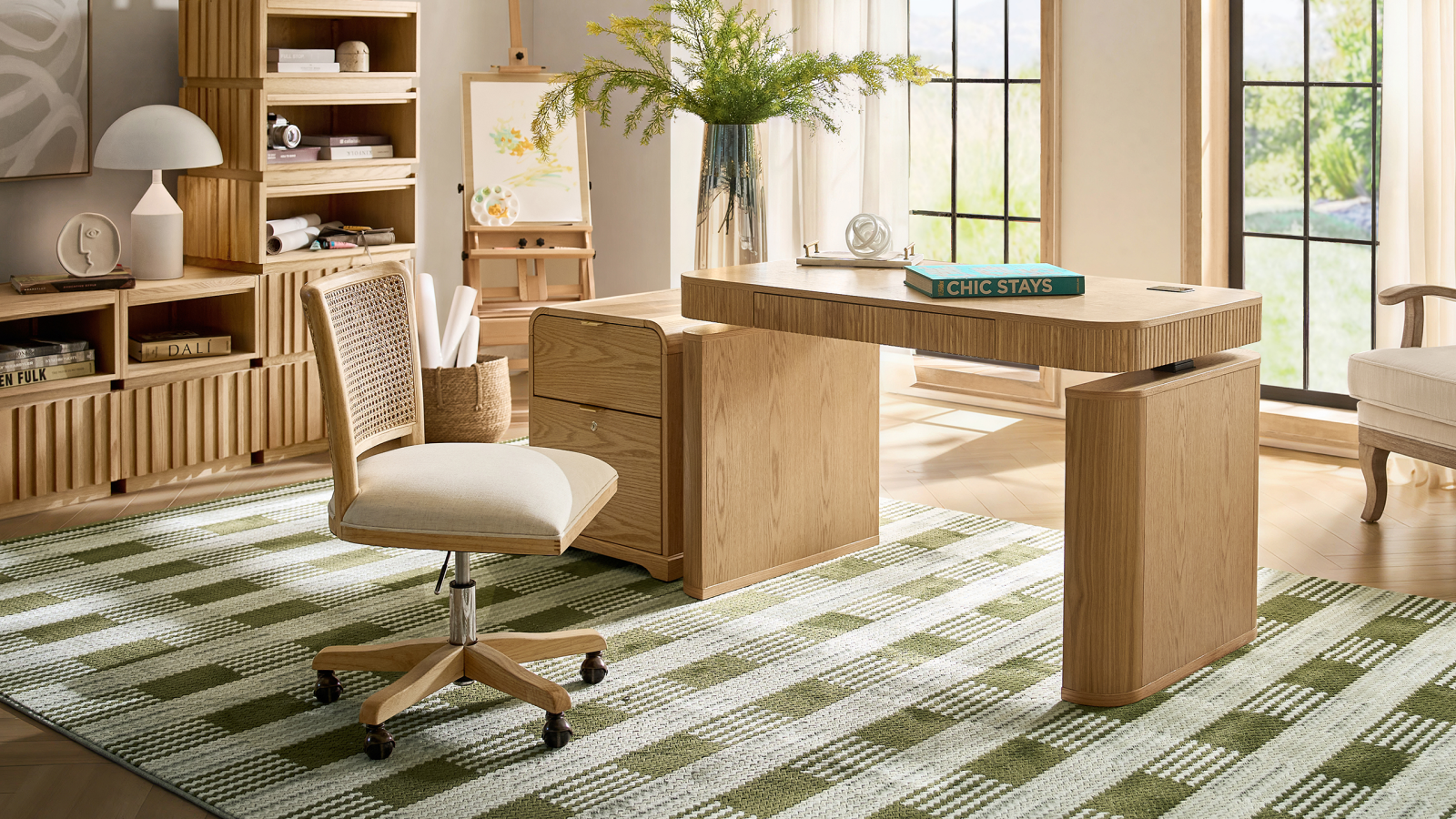
The Baggio Modern Electric Adjustable Standing Desk with Cable Management offers movement-friendly design without creating clutter.
● One-touch electric sit-stand adjustment with three memory presets
● Built-in sit–stand reminder encourages movement throughout the day
● Integrated cable management keeps wires hidden and surfaces tidy
● Soft-close drawer stores essentials without requiring extra furniture
● Compact dimensions designed to fit smaller UK interiors
For many small flats, the challenge is creating a workspace that feels organised without taking over the room. The Baggio desk combines storage, movement, and clean design in one compact footprint.
A Shared Approach
Although one focuses on seating and the other on movement, both products follow the same idea:
Comfort that adapts to everyday living.
A small-space Ergonomic Home Office works best when furniture supports your routine rather than demanding more room than you can spare.
What Not to Buy
Three categories rarely earn their place in a small UK flat. Massive executive chairs often dominate limited floor space and can feel visually heavy in shared living areas. A well-designed ergonomic option like the Amparo Plus shows that supportive seating does not have to look oversized or corporate.
Built-in computer hutches can also become restrictive. They lock you into a fixed setup and often make compact spaces feel enclosed. A cleaner desk design with integrated storage and cable management offers more flexibility.
Finally, gaming chairs marketed for office use may look impressive but often prioritise styling over posture support. Features such as proper lumbar shaping, adjustable height, recline control, and all-day cushioning matter more than aggressive aesthetics when creating an Ergonomic Home Office designed for everyday use.
Putting It All Together
A workable Ergonomic Home Office in a UK flat does not require a separate room. It requires furniture that adapts to your space and supports healthier working habits. A supportive chair such as the Amparo Plus Ergonomic Office Chair helps maintain posture during long sessions, while an adaptable workspace like the Baggio Electric Adjustable Desk encourages movement throughout the day without increasing your footprint.
Add a monitor at eye level, comfortable lighting, and simple cable management, and even a compact corner can become a productive workspace. Hulala Home focuses on furniture designed around real UK homes and smaller living spaces, combining practical dimensions with thoughtful design, delivery guidance, and easy assembly solutions that fit modern routines.
FAQs
What is the minimum space needed for an Ergonomic Home Office?
Roughly 1.2 metres of wall length and 70 cm of depth in front of the desk for a chair. Anything smaller forces compromises, but compact corners and converted wardrobes can still work with the right furniture.
Can I claim home office furniture on UK tax if I work from home?
If you are employed, the rules under HMRC are narrow and usually require employer involvement. If you are self-employed, allowable expenses are more generous. The government guidance at https://www.gov.uk/expenses-if-youre-self-employed has the current rules.
Is a standing desk worth it in a small flat?
A full standing desk usually is not. A desk converter that sits on top of your existing desk gives you most of the benefit without the footprint.
What chair height should I aim for?
Adjust the chair so your feet rest flat on the floor (or on a footrest), your thighs are roughly parallel to the floor, and your elbows are at about 90 degrees when typing.
Do I need a separate monitor or is a laptop enough?
For more than two hours of daily work, an external monitor (or a laptop on a riser plus external keyboard) is significantly better for posture. The HSE DSE guidance is clear on this point.
Reference
[1] (https://www.hse.gov.uk/msd/dse/)
[2] (https://www.nhs.uk/live-well/work-related-stress/)
[3] (https://www.cipd.org/)
[4] (https://www.nhs.uk/live-well/exercise/)
.png?w=1800&h=1000)



.png?w=614&h=180)
.png?w=1180&h=80)